Claude Fable 5 Is Back Online, and Free Until July 12
Anthropic's most capable model returned July 1 after a US export-control blackout. Here's what Fable 5 does, what it costs, and how to use the free window.

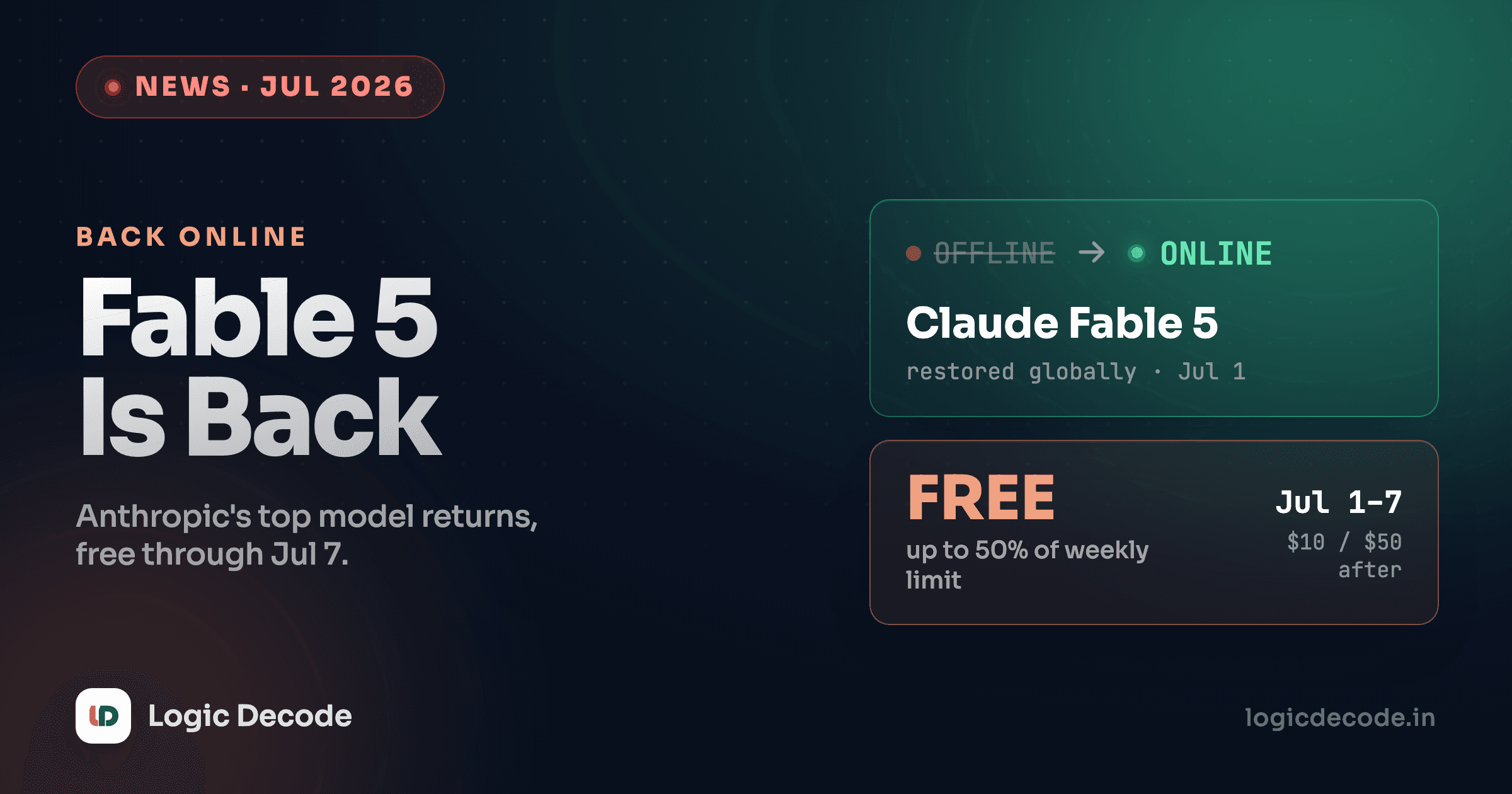
If you spun up Anthropic's newest model in mid-June and it vanished on you, you weren't imagining it. Claude Fable 5 went dark on June 12 and stayed gone for the better part of three weeks. As of July 1 it's back for everyone, and for nearly two weeks you can run it without paying a cent over your existing plan.
Here's the whole story: why it disappeared, what the model actually does, what it costs, and what to point it at before the free window closes.
Why the most capable Claude disappeared
Fable 5 launched on June 9 as Anthropic's most capable generally available model. Three days later it was gone.
On June 12 the US government placed export controls on Fable 5 and its unrestricted sibling Mythos 5, ordering Anthropic to block access for foreign nationals whether inside or outside the country. Anthropic had no way to verify nationality in real time, so it did the only thing it could and shut both models off for all customers worldwide, including its own non-US employees.
The trigger was a jailbreak. Amazon researchers found a way to prompt Fable 5 so it flagged software vulnerabilities and, in one case, wrote code showing how one could be exploited. Anthropic's own testing then muddied the panic: older, weaker models including Claude Opus 4.8, GPT-5.5, and Kimi K2.7 could surface the same vulnerabilities. The company called it a borderline case that touched routine defensive security work, not the dangerous capabilities the controls were meant to fence in.
The government came around. On June 26 it cleared Mythos 5 for select organizations, and by June 30 the controls were lifted. Access came back globally on July 1. Forbes reported that Commerce Secretary Howard Lutnick said the government had "worked closely" with Anthropic to analyze and approve the model, while reserving the right to reimpose limits if circumstances change.
Fable 5 and Mythos 5 are the same model
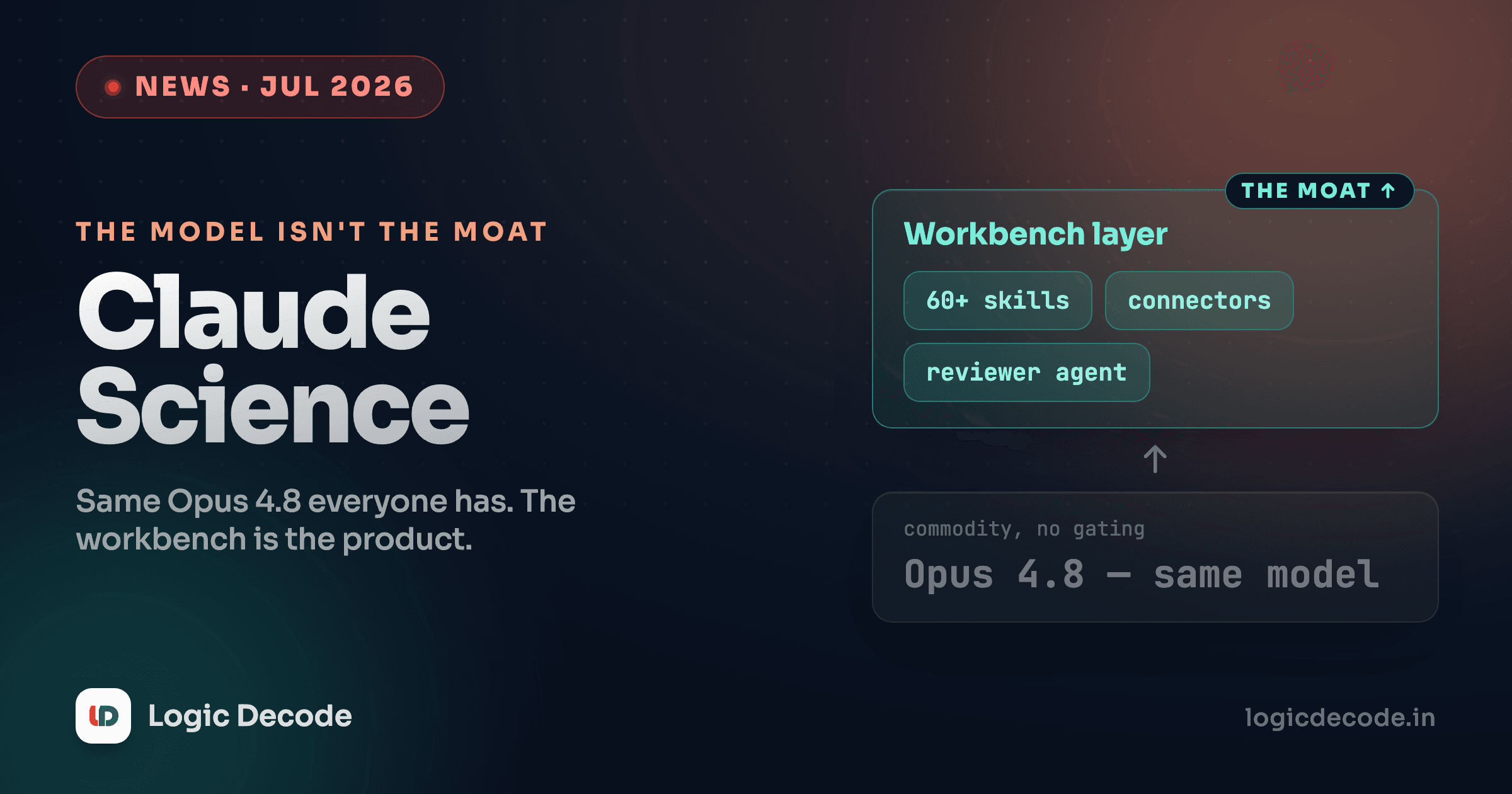
This part trips people up, so it's worth being clear. Fable 5 and Mythos 5 are the same underlying model. Fable 5 is the version made safe for general use. Mythos 5 is the same weights with the safeguards removed, handed only to authorized users like vetted cybersecurity teams and researchers.
The safeguards aren't a separate dumber model doing the talking. Fable 5 answers you directly almost all the time. When a request trips a classifier for cybersecurity, biology and chemistry, or attempts to distill the model, it hands that turn off to Opus 4.8 instead. Anthropic says that fallback fires in under 5% of sessions.
Which one are you using?
On Pro, Max, Team, and Enterprise plans, and in Claude Code, you're using Fable 5, the safeguarded version. Mythos 5 is gated behind an approval process and isn't what shows up in the model picker.
What it's actually good at
Anthropic pitches Fable 5 at the hard, long jobs. The numbers behind that pitch are worth knowing before you spend your free week on it.
- Coding. On Cognition's FrontierCode evaluation it scores highest among frontier models, even at medium effort. Stripe said it compressed months of engineering into days.
- Long-horizon work. It holds focus across millions of tokens. In one memory test where it played Slay the Spire across runs, it improved three times faster than Opus 4.8.
- Vision. Anthropic calls it the new state of the art for vision, good enough to read precise numbers off scientific figures and rebuild a web app from a screenshot.
- Knowledge work. It posted the top score of any model on Hebbia's finance benchmark.
The research claims come from Mythos 5, the unrestricted version. Scientists preferred its molecular biology hypotheses to Opus-class output around 80% of the time, and protein design experts said it sped up parts of drug design by roughly ten times. You won't hit those exact use cases on a Pro plan, but they tell you where the ceiling is.
The free promo, and its fine print
From July 1 through July 12, subscribers can spend up to 50% of their weekly usage limit on Fable 5 at no cost beyond their normal plan. It's on Pro, Max, Team, and premium Enterprise seats. The Free plan is out.
Two catches worth internalizing. First, Fable 5 eats your weekly limit faster than other models, so that 50% goes quicker than the number suggests. Second, once you hit the cap you either buy usage credits or switch back to another model. After the promo ends at 11:59 PM PT on July 12, Fable 5 stays available only through credits on subscription plans.
The clock is real
The free window closes 11:59 PM PT on Sunday, July 12. Plan the week around it. In Claude Code you need version 2.1.170 or newer for Fable 5 to show up. And note the API is not part of this: calls there bill separately at standard rates.
Quick check
During the July 1–12 promo, how much of your weekly subscription limit can you spend on Fable 5 at no extra cost?
What it costs the rest of the time
When you're paying by the token, Fable 5 runs $10 per million input tokens and $50 per million output, with the usual 90% discount on cached input. That's the premium tier. Here's the lineup next to it:
| Model | Input / MTok | Output / MTok | Where it fits |
|---|---|---|---|
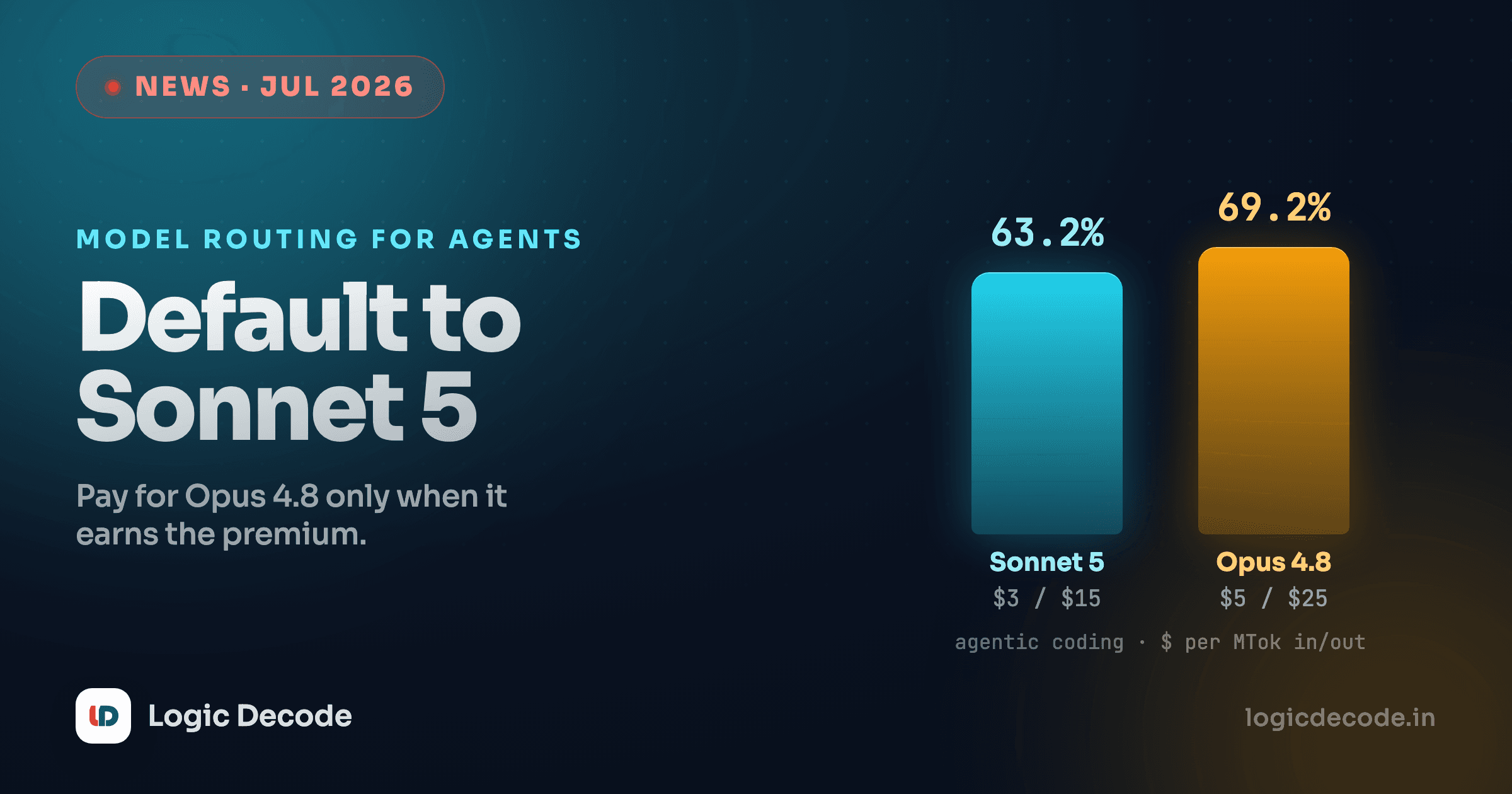
| Sonnet 5 | $3 | $15 | the default for most agent work |
| Opus 4.8 | $5 | $25 | harder reasoning and planning |
| Fable 5 | $10 | $50 | your longest, most demanding jobs |
Fable costs twice what Opus does per token, so it isn't the model you reach for by reflex. The same routing logic we covered for Sonnet 5 versus Opus applies here, just shifted up a tier: default to the cheaper model, and escalate only when the task genuinely needs the extra capability. If you've been following the broader price war, Fable is the reminder that the top of the market still charges a real premium.
What's different now that it's back
Anthropic didn't just flip the switch again. It shipped a tighter safety classifier that blocks the specific technique from the Amazon report in over 99% of cases, and you now get a notification when a request is blocked instead of a silent refusal. The company also committed to deeper government coordination: pre-release access for evaluators, faster vulnerability sharing, and joint research.
There's a lesson in the whole episode that outlasts the free window. A frontier model can go from launched to legally unavailable in three days, for reasons that have nothing to do with your code. If a single model is load-bearing in your product, keep a fallback wired up. Fable's own safeguards route to Opus 4.8 for exactly this kind of reason, and your architecture can borrow the idea.
How to spend the free week
Don't waste the allotment on chat you could run on Sonnet 5. Point Fable 5 at the work where its ceiling shows: a large migration you've been putting off, a multi-day agentic task, a vision-heavy job like turning screenshots into working UI, or a gnarly debugging session across a huge codebase. Burn the free half of your limit on the stuff that was too big for your usual model, then fall back to Sonnet or Opus for everything else.
The window is short and the model is genuinely strong. Line up one ambitious task, run it before Sunday night, and see whether the top tier earns its keep on your work.
Sources: Claude Fable 5 promotional access, Introducing Fable 5 and Mythos 5, Redeploying Fable 5, and Forbes on the lifted export controls.

Written by
Rhythm Bhiwani
Engineer and relentless builder, happiest reverse-engineering hard problems until they click.
Enjoyed this?
Tap the heart to leave some love.
Be the first to react
Comments
Join the conversation.
Loading comments…